Meeting Held with Academician Kamal Abdulla in Bilasuvar
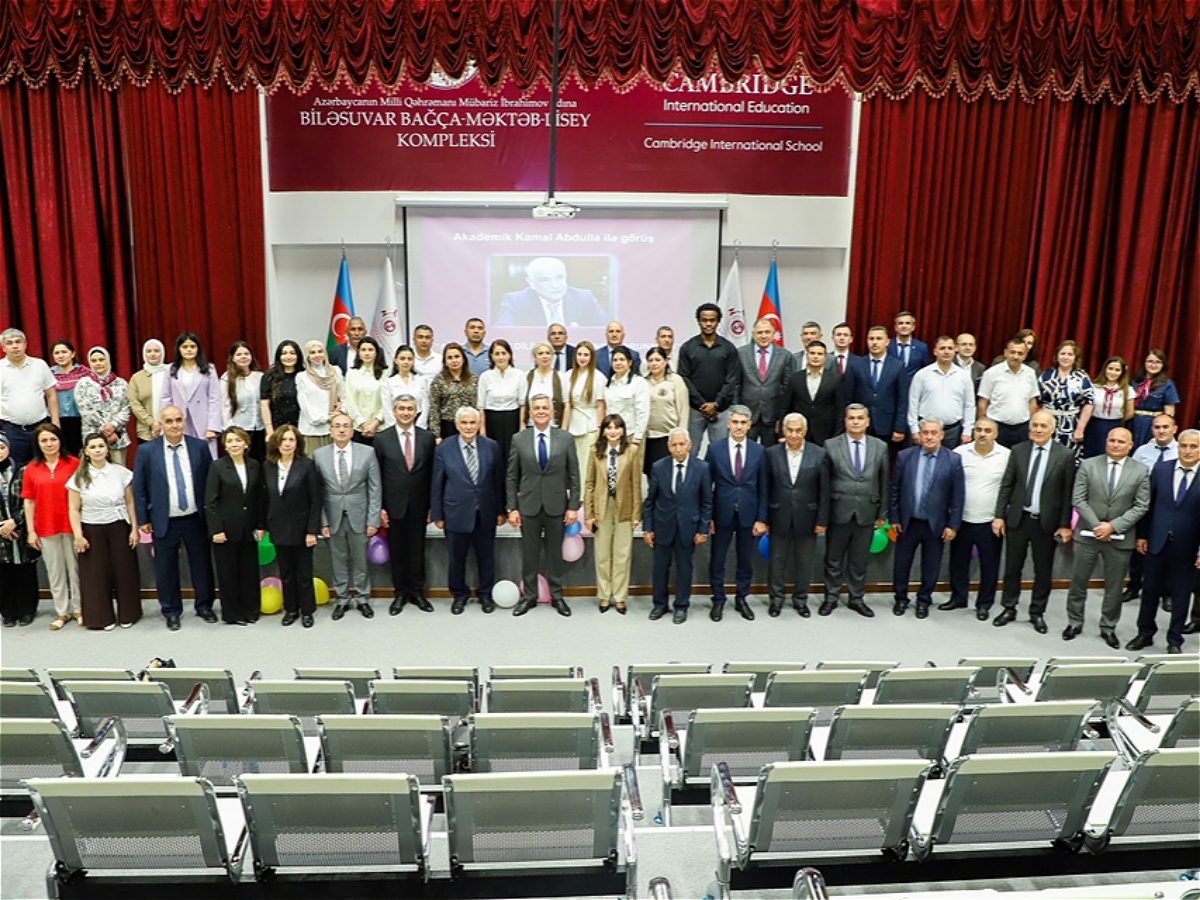
On June 1, a meeting with Academician Kamal Abdulla, Rector of Azerbaijan University of Languages (AUL), was held at the Bilasuvar Lyceum named after National Hero Mubariz Ibrahimov as part of an event dedicated to the topic “Preserving the Purity of the Azerbaijani Language.” The event featured extensive discussions on the importance of safeguarding the Azerbaijani language as a key bearer of national and moral identity, educating the younger generation in the spirit of devotion to their mother tongue, and the role of language in the development of Azerbaijan’s international humanitarian and cultural relations. In his speech, Academician Kamal Abdulla emphasized the exceptional significance of the Azerbaijani language for statehood and national consciousness and spoke about the strategic nature of the policy pursued by the country’s leadership in this area.
Academician Kamal Abdulla began his remarks by expressing his pleasure at being in Bilasuvar Lyceum and thanked the Bilasuvar District Executive Authority, the lyceum administration, and the organizers of the event. He paid tribute to the cherished memory of National Hero Mubariz Ibrahimov, who holds a special place in the heroic history of the Azerbaijani people, noting that this educational institution is not only a center of learning and instruction but also an important place where patriotism, national spirit, and moral values are preserved and promoted.
The academician stated that the preservation of the purity of the Azerbaijani language, the main topic of the meeting, is of particular relevance today in terms of national identity and cultural continuity. He emphasized that the key directions of state policy concerning the development and protection of the Azerbaijani language have been clearly reflected in the speeches and interviews of President Ilham Aliyev. According to him, the President’s language policy demonstrates that the mother tongue is viewed not merely as a means of communication but as a fundamental element of national existence and spiritual integrity. Every Azerbaijani citizen, he noted, should recognize their responsibility in implementing this strategic vision.
The AUL rector described the launch of the Confucius Center at Bilasuvar Lyceum as a significant event. He noted that, for the first time among Azerbaijani lyceums, such a center had been established in Bilasuvar, reflecting the growing interest of teachers, students, and the wider public in the Chinese language, culture, and history. The Center’s activities, he said, would contribute to the further expansion of educational and cultural cooperation between Azerbaijan and China.
Academician Kamal Abdulla highly appreciated the support of the Ambassador of the People’s Republic of China, who attended the event, stressing that the attention and support shown by the Chinese side would help establish direct links between Bilasuvar Lyceum and leading educational institutions in China. He noted that this cooperation promises important prospects not only for the region but also for Azerbaijan’s education system as a whole.
The academician also addressed the relationship between learning foreign languages and preserving the mother tongue. Pointing out that more than twenty languages are currently taught at Azerbaijan University of Languages, he spoke about the Azerbaijani Language and Culture Centers established by the university in various countries around the world. Through these centers, students not only learn the Azerbaijani language but also gain a deeper understanding of the country’s literature, history, culture, and national values. He emphasized that these centers play an important role in promoting the realities of Azerbaijan to the international community.
Highlighting that language preservation is not solely the responsibility of philologists or linguists but of society as a whole, Kamal Abdulla stated that one of the most effective ways to protect the mother tongue is through a deep understanding of national literature, folklore, and cultural heritage. Through reading and cultural self-awareness, people often preserve the richness and purity of their language without even realizing it.
In this context, Academician Kamal Abdulla particularly stressed the importance of studying the epic “Kitabi-Dada Gorgud” (“The Book of Dede Gorgud”). In his view, this magnificent monument is a fundamental source reflecting the historical development of the Azerbaijani language, the people’s system of thought, and their spiritual world. The epic is not only a literary work but also a major bearer of national identity, historical memory, and the ideology of Azerbaijanism. Revisiting “The Book of Dede Gorgud,” he noted, allows people to gain a deeper understanding of the nation’s spirit and cultural roots.
The academician expressed regret that the epic is currently taught only in a general manner in secondary schools and is largely limited to philology programs at universities. He argued that the potential of this great heritage should be introduced to a much broader audience and that its philosophical, cultural, and social dimensions should be presented to all segments of society.
In his speech, the rector also referred to the book “Dede Gorgud and Fuzzy Logic,” which he co-authored with Academician Rafiq Aliyev. He noted that research conducted through the prism of the fuzzy logic theory developed by the world-renowned scientist Lotfi Zadeh made it possible to evaluate the deep semantic layers, worldview, and system of moral values reflected in “The Book of Dede Gorgud” from a new perspective. This approach revealed numerous layers of meaning that had previously gone unnoticed and provided answers to several important scholarly questions. The research demonstrates that the Azerbaijani people’s traditions of democratic thinking have deep historical roots. The social relations and moral values reflected in the epic show that democratic thought was already taking shape among the Azerbaijani people in ancient times.
Concluding his speech, Academician Kamal Abdulla described the preservation of the Azerbaijani language as a sacred duty for every citizen. He stated that the survival of the language means the survival of the nation, while passing it on to future generations ensures the continuity of national existence. The Azerbaijani people have preserved their language throughout the centuries, and this sacred mission now rests with the modern generation. Calling on young people to approach their mother tongue with love and responsibility, the rector expressed confidence that the Azerbaijani language would continue to live and develop as one of the main pillars of the nation’s spiritual strength and unity.