Return to the Roots: The Role of Sanskrit at the Azerbaijan University of Languages
The Faculty of Philology at the Azerbaijan University of Languages (AUL) is considered one of the leading faculties of the institution. As its name suggests, its main area of specialization is “Language and Literature,” covering philology in Azerbaijani, English, French, German, Russian, and Spanish. In the modern era, knowing any language is regarded as a positive indicator. However, it should be noted that AUL not only teaches modern languages but also trains professional linguists, translators, and philologists in these languages. Therefore, analyzing the structure of a language, studying its historical development stages, and explaining linguistic phenomena on a scientific basis are among the key professional responsibilities of a philologist.
The main foreign languages taught at the faculty are English, French, and German, which belong to the Germanic and Romance language groups and are part of the Indo-European language family. Each language has its own unique path of historical development. Throughout history, the emergence of new countries, economic and trade relations between them, and the integration of peoples have led to changes in the lexical composition of languages, resulting in the creation of new words or semantic and phonetic transformations of existing ones. The historical roots of most modern languages are associated with the ancient Sanskrit language.
Sanskrit is characterized as one of the ancient languages that form the historical foundation of many languages that developed in Europe and nearby regions. In this regard, teaching Sanskrit at the faculty is considered scientifically and methodologically appropriate. Since students study not only Germanic languages but also Russian, a Slavic language, and its literature, it is natural and necessary to explore the historical development stages of these languages. Therefore, it is highly important for students to investigate and understand the roots, history, and branching of languages from a proto-language.
Through language, many social, historical, and cultural realities are revealed. The teaching of Sanskrit is particularly essential for specialists in this field. Studying this language significantly contributes to the development of philologists’ research potential, broadens their scientific outlook, and facilitates their future research work.
The teaching of Sanskrit at the university enables students to develop a broader academic perspective in their fields of study. In order to systematically trace the historical development of different languages, a decision has been made at AUL to include Sanskrit and Latin in the curriculum. As a result, students learn expressions, proverbs, and cultural features formed in ancient languages, gaining a deeper understanding of the relationship between language and culture.
Research shows that Sanskrit is known as the language in which religious, philosophical, and scientific texts were written, including works on ancient mathematics. Its history dates back approximately 3,000–4,000 years. Today, it is used in religious ceremonies, texts, and hymns. Prayers in this language are still recited, although it is no longer used as a means of everyday communication.
Sanskrit is considered one of the most important linguistic sources for studying ancient world literature. In this context, similar lexical units with different pronunciations and spellings can be found across various languages. For example:
In Sanskrit: mātṛ (मातृ), in English: mother, in Russian: мать;
In Sanskrit: bhrātṛ (भ्रातृ), in English: brother, in Russian: брат.
The population living in modern India preserves elements of ancient Sanskrit to some extent through religious beliefs, customs, and traditions, although it is not used as a spoken language. The connection between Azerbaijani and Sanskrit is more distant compared to Germanic and Slavic languages. However, the possibility of certain direct or indirect links cannot be excluded, and these are mainly explained through ancient Iranian languages, particularly Avestan and Persian.
As noted above, Sanskrit and Latin have been included in the curriculum of the Philology program at the Faculty of Philology at AUL. These subjects are taught only in the third year. The teaching process is conducted by both local and international instructors.
Considering that philologists work in the fields of linguistics, literary studies, and research, learning Sanskrit is of particular importance for reading ancient texts in the original, understanding them accurately, and analyzing them scientifically.
The initiative to introduce the teaching of this language was proposed by the Rector of the university, Academician Kamal Abdulla, with the aim of engaging students in research and training competitive, highly qualified specialists who meet the demands of the labor market.
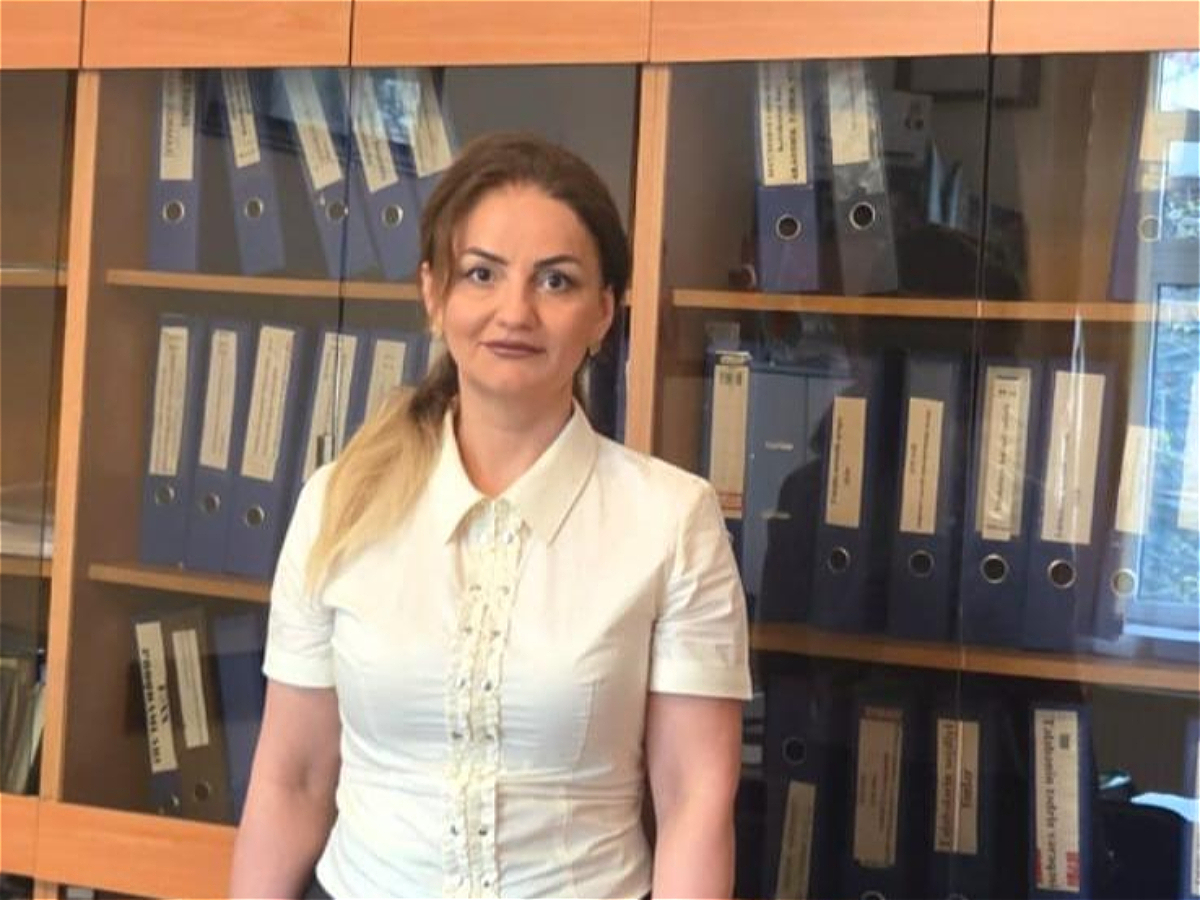
Aynur Budagova
Dean of the Faculty of Philology,
Associate Professor, PhD in Philology