An event dedicated to the 100th anniversary of the First Turkological Congress was held at ADU
Historical memory and contemporary challenges
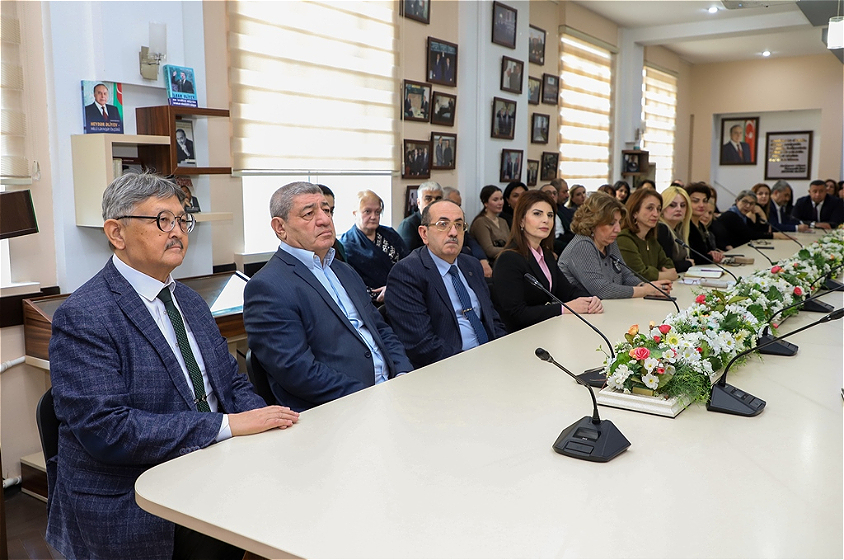
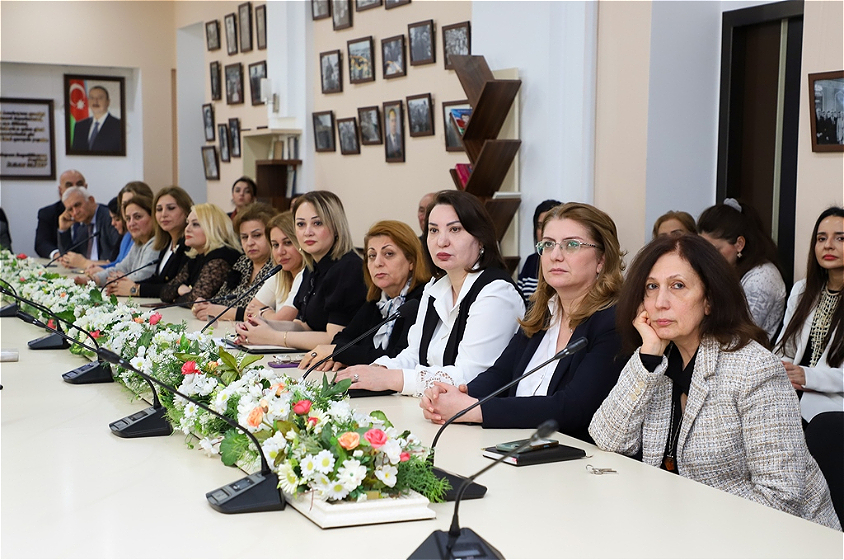
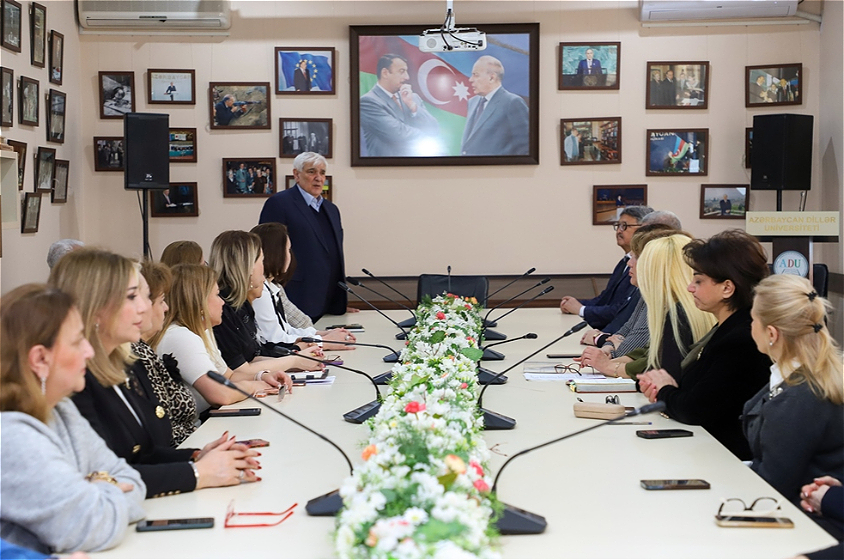
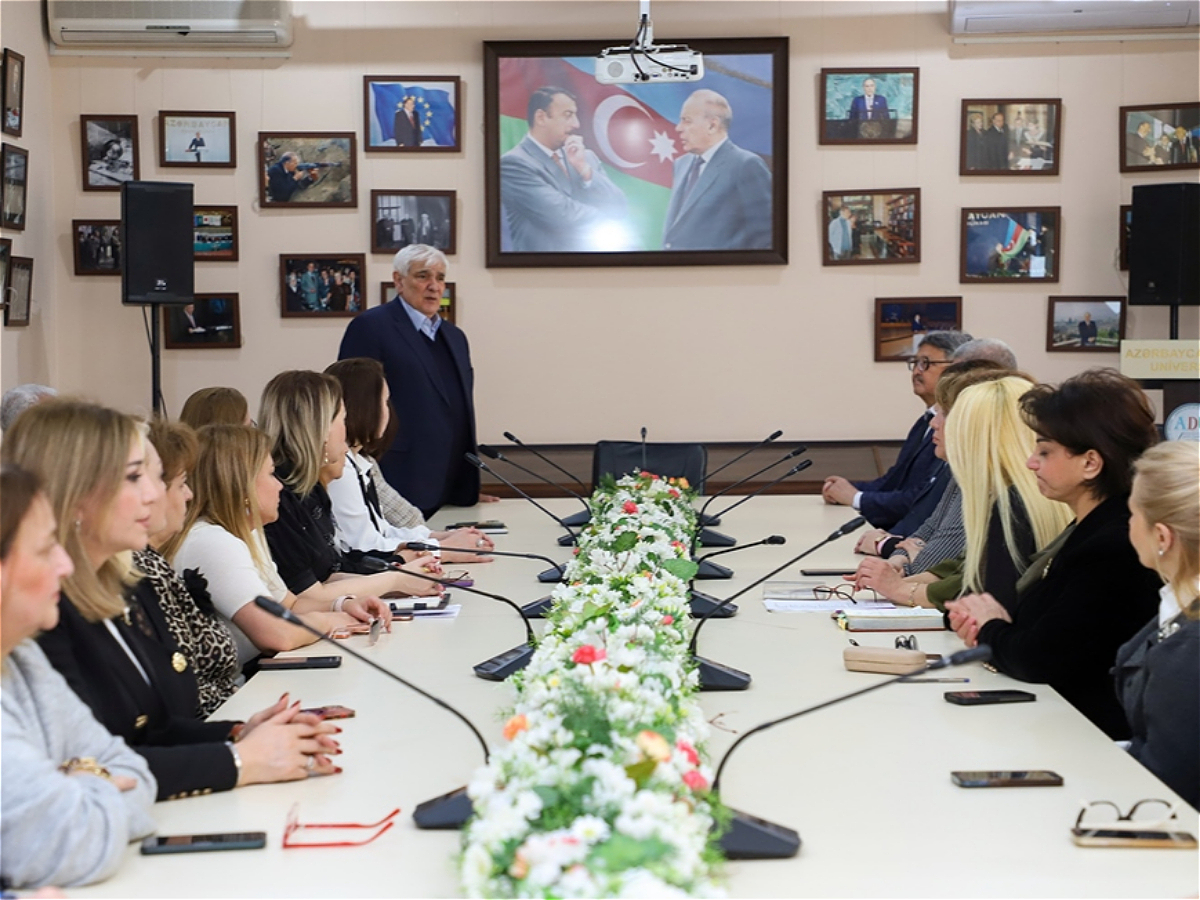
On March 2, an event dedicated to the 100th anniversary of the First Turkological Congress was held at Azerbaijan University of Languages (ADU). The event aimed to reassess the historical significance of the First Turkological Congress, which was organized in Baku in 1926 and marked an important stage in the scientific and cultural integration of Turkic peoples, as well as to analyze its ideological and theoretical legacy in the modern context.
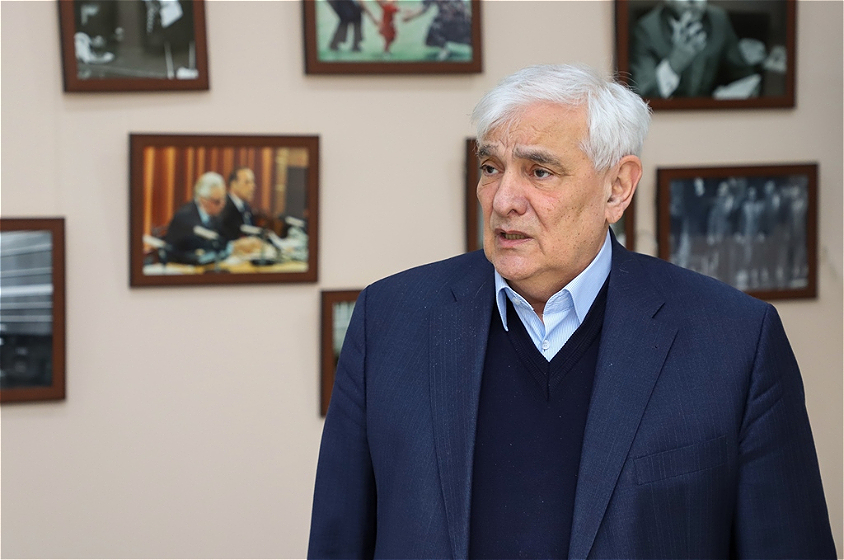
Opening the event with introductory remarks, the Rector of ADU, academician Kamal Abdulla, greeted the participants, emphasized the scientific and public significance of the event, and introduced the guests. It was noted that February 2026 marks the 100th anniversary of the First Turkological Congress held in Baku. Considering that this remarkable historical event represents a bright page in the twentieth-century scientific and cultural life of Azerbaijan and the Turkic world as a whole, President Ilham Aliyev signed an Order “On the celebration of the 100th anniversary of the First Turkological Congress.”
In his speech, academician Kamal Abdulla stated that the First Turkological Congress played an exceptional role in the cultural integration of Turkic peoples who share a common rich past and ancient heritage. It was noted that at this international scientific forum, the most pressing issues of Turkology — language, history, ethnography, literature, and cultural problems — were systematically discussed, and special attention was given to the issue of transitioning to a unified common Turkic alphabet based on the Latin script.
The implementation of the progressive ideas voiced at the congress soon encountered severe obstacles created by the Bolshevik regime and the Soviet totalitarian system of governance. The vast majority of the congress delegates were subjected to the repressions of the 1930s, and dozens of prominent linguists, literary scholars, historians, poets, and thinkers were sentenced to the harshest punishments. Thus, the First Turkological Congress became, on the one hand, a peak of scientific integration, and on the other, a mechanism of the Soviet ideological machine targeting selected intellectuals under the label of “pan-Turkism.” This process dealt a heavy blow to the development of Turkology and disrupted the chain of scientific continuity for a long time. Only at the end of the twentieth century, with the national independence of the Turkic peoples, did the process of spiritual revival accelerate, and the idea of a common Turkic alphabet based on the Latin script regain relevance.
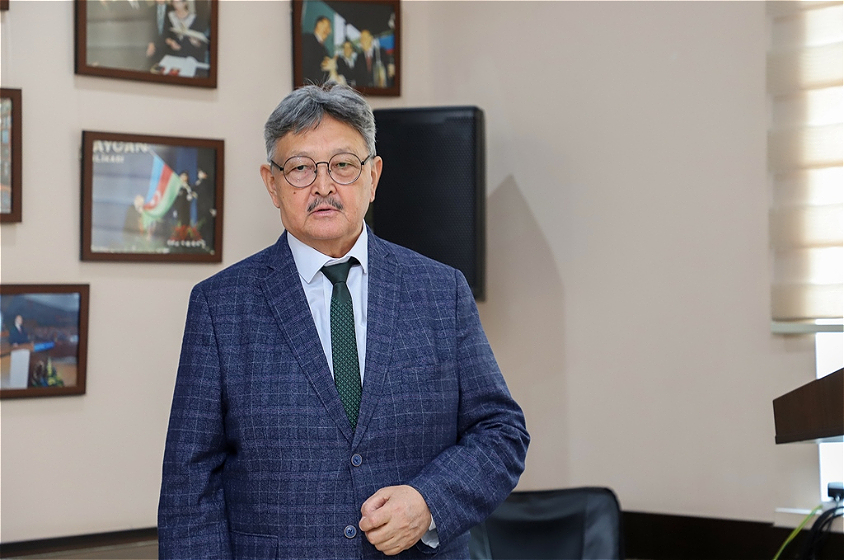
Speaking at the event, the Chair of the International Kazakh Language Academy, Professor Erden Kajıbek, noted that historical and cultural ties between Azerbaijan and Kazakhstan have deep roots and stated that they have always stood by the Azerbaijani people. Recalling the tragic moments he witnessed in Baku during the January 20 events of 1990, the professor emphasized that these events left an indelible mark on his memory.
In his speech, Erden Kajıbek substantiated with scholarly arguments that the First Turkological Congress, held in Baku from February 26 to March 5, 1926, laid the foundation for a new stage in the cultural integration of Turkic peoples. He stated that many of the ideas put forward at the congress — particularly the concept of a common alphabet and cultural rapprochement — are being successfully implemented in modern conditions. The formation of a unified family model of the Turkic world, the strengthening of allied relations based on a spirit of brotherhood, and the deepening of cultural cooperation have already acquired a sustainable character.
The floor was then given to academician Nizami Jafarov. He noted that holding the First Turkological Congress in Baku was entirely a logical development. The academician emphasized that the first large-scale implementation of the new alphabet among the Turkic republics began in Azerbaijan as a logical result of the consistent struggle of progressive intellectuals for alphabet reform since the nineteenth century. The recognition of Baku as one of the authoritative centers of world Turkology since the early twentieth century and its distinguished intellectual life made it natural for the congress to be held precisely there.
Academician Nizami Jafarov stated that the active participation of Azerbaijani intellectuals in the congress demonstrated the formation of strong scientific schools in the country not only in linguistics but also in literature, history, folklore, ethnography, and enlightenment. These facts constitute the historical foundations for Azerbaijan’s recognition as a leading center of Turkology in the post-Soviet space.
Academician Muxtar Imanov, who also spoke at the event, drew attention to the scientific content of the First Turkological Congress and the strategic significance of the decisions adopted. He stated that issues of global importance for the cultural life of Turkic peoples living across the vast geography of the former Soviet Union were discussed at the congress. The development of scientific and methodological principles for the transition to a Latin-based alphabet was one of its most important outcomes. The decisions adopted at the congress were strategic not only in terms of language policy but also with regard to cultural identity and integration.
Following the speeches, discussions were held. It was noted that among the decisions adopted by the First Turkological Congress, particular importance was attached to the issues of a common alphabet, a common literary language, and comparative linguistics. These problems remain relevant today and carry strategic importance for deepening scientific and communicative integration among Turkic peoples.
Thus, the event held at Azerbaijan University of Languages remained in memory as an important scientific occasion in terms of reassessing the historical legacy of the First Turkological Congress and determining the prospects for applying its ideological and theoretical principles in the contemporary Turkic world. The event demonstrated that the integration idea laid down in 1926 remains relevant today and plays an important methodological role in shaping the shared cultural future of Turkic peoples.
Sadiq Zaman
Doctor of Philosophy in Philology