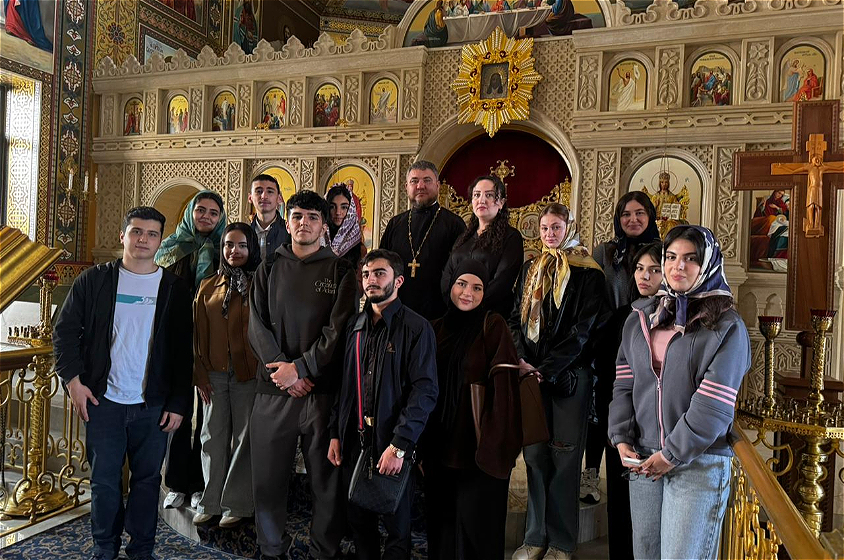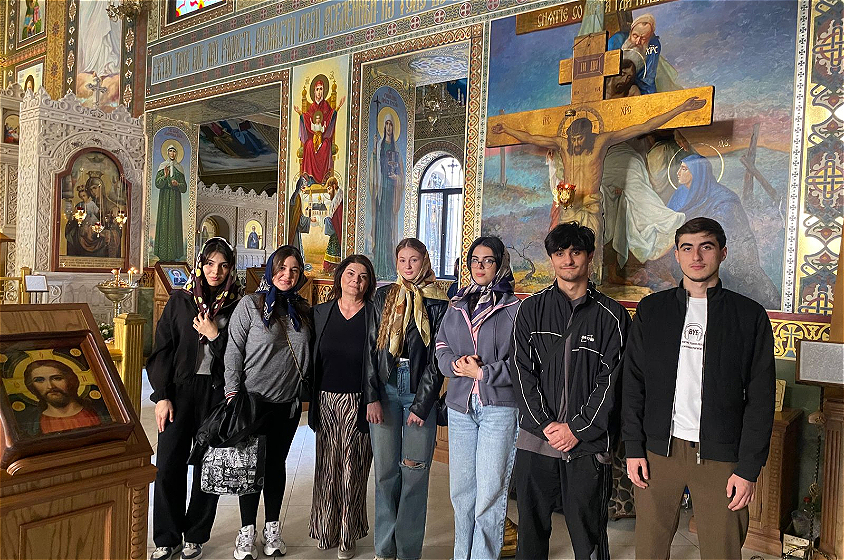
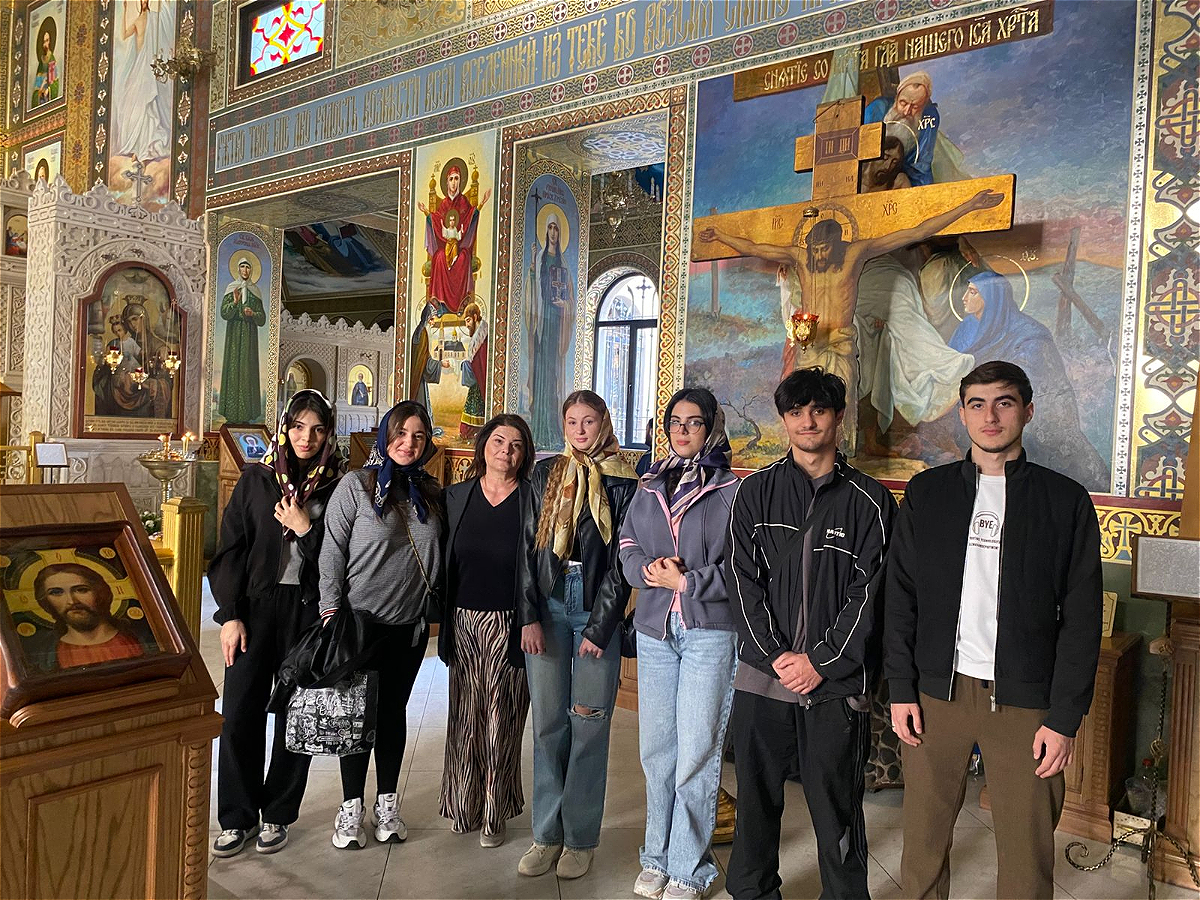
Students of the Caucasus Studies program visit the Baku Orthodox Church
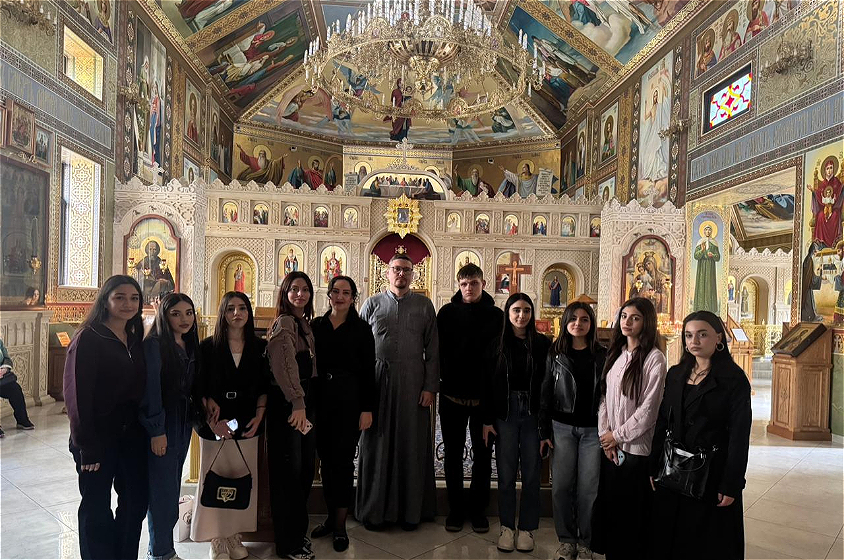
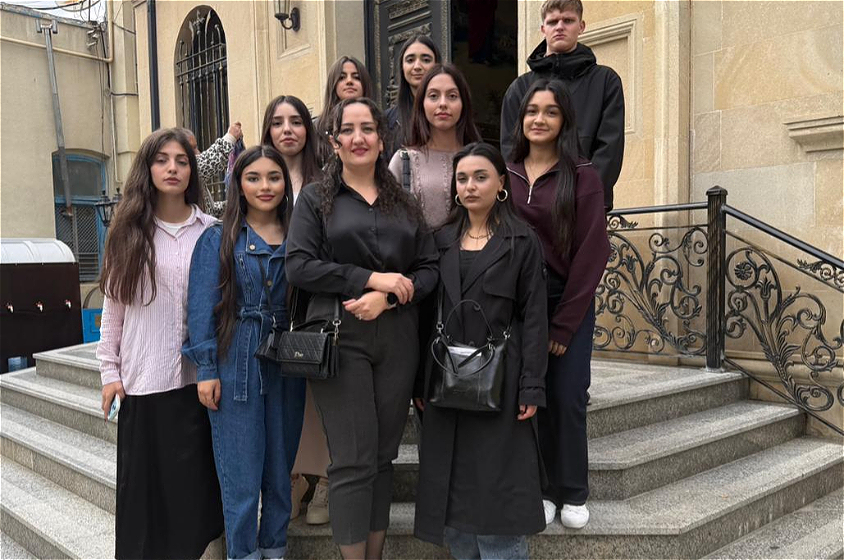
On October 22, as part of the course “Geography of the Regional (Caucasus) Countries,” geography lecturer Aysel Nəhmətova from the Department of Caucasus Studies and Azerbaijani History at the Azerbaijan University of Languages (AUL) organized an educational excursion to the Baku Orthodox Church for first-year students of the Faculty of International Relations and Regional Studies, majoring in Caucasus Studies (groups 171A/B). The purpose of the visit was to raise students’ awareness of the population, labor resources, languages, religions, and cultures of the peoples of the Caucasus.
During the excursion, priest Ruslan Sherstnyov of the Russian Orthodox Church introduced students to the history, architecture, and religious traditions of the Orthodox Church. He emphasized his respect for Muslim visitors and expressed his special affection for Islam.
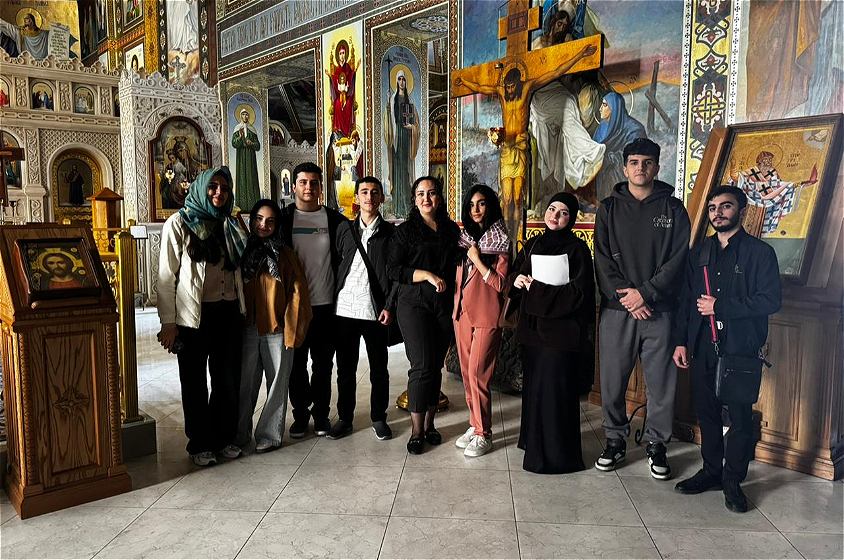
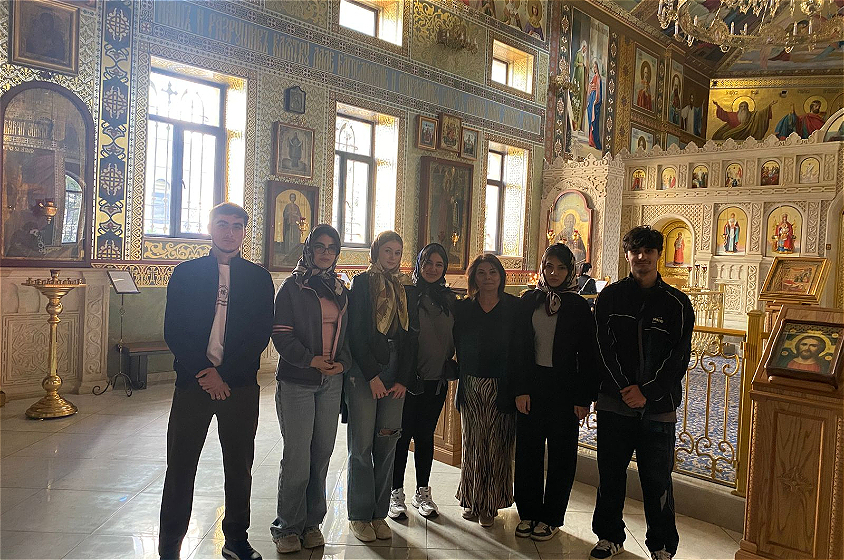
On October 27, lecturers of the Department of Caucasus Studies and Azerbaijani History, Reyhan Abbasova (as part of the course “Religion in the Regional (Caucasus) Countries”) and Aysel Nəhmətova (“Geography of the Regional (Caucasus) Countries”), also organized a visit to the Russian Orthodox Church for groups 171R and 375R. Priest Roman provided detailed information about the church’s functions and activities, stressing the spirit of tolerance and peaceful coexistence among people of various nationalities and faiths in Azerbaijan.
As a result, the students gained first-hand insight into the religious and cultural life of the Christian Orthodox community. They compared their own national values with those of other peoples, developing cultural flexibility and a deeper understanding of the importance of respect for different religions and beliefs, as well as multiculturalism. During the excursion, the students also applied research methods such as observation, interview, and photo documentation, thereby enhancing their academic research skills.
Thus, the church visit, as a living example of Azerbaijan’s multiethnic and multiconfessional society model, helped students better understand the state’s policy of tolerance.