Silent genocide of the cultural heritage of Western Azerbaijan: a plan to destroy the traces of the homeland
Representatives of the middle generation remember well: at the height of the First Karabakh War, events in the region were discussed everywhere - both in the international press and on Russian TV channels. It is no secret that the vast majority of materials broadcast on the air or published in print media of that time directly or indirectly reflected the Armenian point of view.
Classical analysis dictates the need to distinguish between objective and subjective reasons for this trend. Obviously, it was not necessary to count on the European Union, which acted as a "Christian club" and consistently supported the side of the aggressor - in this case, nothing would have changed. As for the subjective reasons, one of the key components of information bias was undoubtedly large-scale Armenian propaganda.
At the state level, the information pressure strategy was aimed at presenting Armenians as a people with a rich cultural and historical heritage, while neighboring peoples were portrayed as barbarians, devoid of civilization and envious of someone else's greatness. Despite the dramatic events of recent years, little has changed in this direction. Moreover, with the development of the Internet and social networks - such as Facebook, Twitter and YouTube - the propaganda activities of the Armenian side have only intensified, taking more aggressive and sophisticated forms.
It is no coincidence that the President of the Republic of Azerbaijan Ilham Aliyev drew attention to this circumstance on April 9 at an international forum held at ADA University entitled "Towards a new world order": "It is almost impossible to find an Armenian politician who would not dream of revenge and the return of Karabakh. This is reality. We receive information about this from different sources and must take it into account. Perhaps this was one of the main conclusions we made after the war and in the post-war period."
What does this reality dictate to us?
The Armenian side, which throughout its history distorted objective facts, skillfully manipulated people's feelings - fear, hope, anger or patriotism - in order to drag public opinion to its side. Using every opportunity, she turned the emotions and perception of the audience into an object of purposeful manipulation. At the same time, Armenians are most afraid of losing the image of a "suffering, cultural and ancient people", because it is this image that serves as the foundation of the entire propaganda structure for them, on which the rest of the system of influence is then built.
We are well aware that in essence Armenian propaganda resembles an idol with clay legs from a biblical plot: "It was a huge idol that inspires fear and radiates greatness. His head was made of pure gold, his chest and hands were made of silver, his stomach and hips were made of copper, his legs were made of iron, and his feet were half iron, half clay. And then a stone broke off from the mountain, hit the clay and iron feet... and everything collapsed. Gold, silver, copper, iron and clay crumbled into dust, like a crumb in the wind, and there was no trace of it."
As already mentioned above, this is the truth known to us, since the Azerbaijani people are well aware that this propaganda is not based on any reliable arguments and evidence. However, on international platforms, the very "cliff fragment" is needed, which could turn the propaganda structure built by chauvinist and revanchist, pro-Armenian forces into dust.
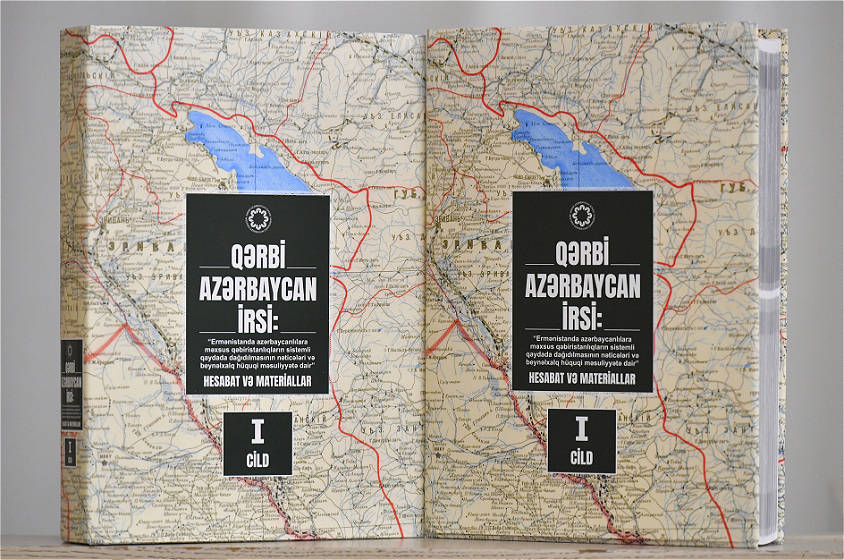
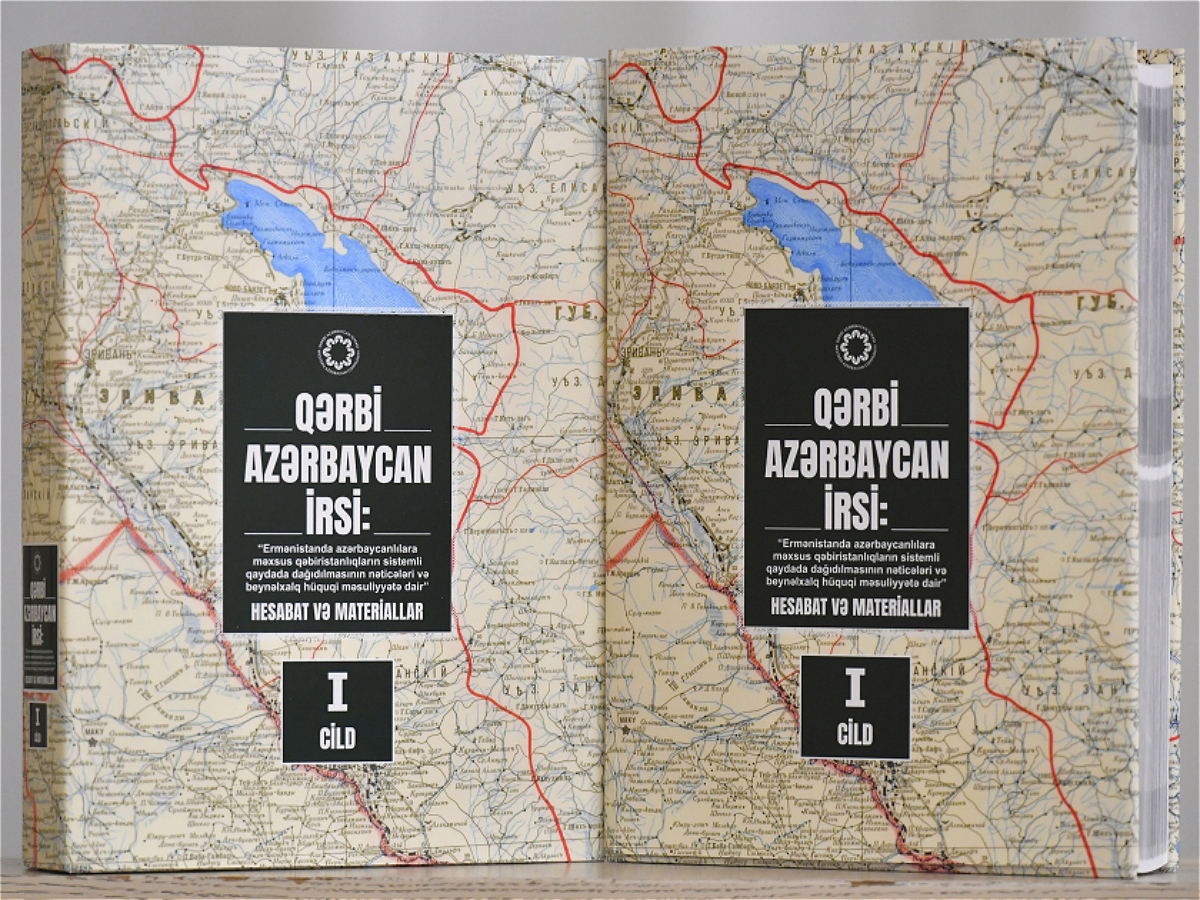
Among such thorough research works is the book by respected authors Aziz Alekperli and Sabuhi Huseynov "Consequences of the systematic destruction of Azerbaijani cemeteries in Armenia and issues of international legal responsibility".
For the first time in Azerbaijan, the policy of systematic destruction of Azerbaijani cemeteries on the territory of Armenia and its consequences became the subject of scientific analysis. The study is devoted to the documentary recording of the facts of deliberate vandalism by the Armenian state in relation to cemeteries on the natively historical and ethnic Azerbaijani lands - in West Azerbaijan. In the preface to the book, the author of the idea and project manager Professor Adalyat Veliyev emphasizes: "The state of Armenia has not limited itself to ethnic cleansing - genocide and deportation against the Azerbaijanis of Western Azerbaijan. It sought to completely uproot the historical roots of Azerbaijanis from these lands, destroy their material and cultural heritage. One of the key tasks of the Concept of Return is to document this criminal activity, its historical dynamics, as well as to bring Armenia to justice under international law on the basis of irrefutable facts. To date, an extensive study has been conducted on the genocidal policy of the Armenian authorities regarding toponyms, historical and cultural monuments belonging to Azerbaijanis on the territory of Armenia. A rich database has been formed, including indisputable facts and documents. Armenia's policy regarding the historical presence of Azerbaijanis on its territory was not limited to deportation and genocide. One of the main directions of this activity was the destruction of Azerbaijani cemeteries - the most important element of material and cultural heritage. Until 1991, there were more than 700 Azerbaijani cemeteries on the territory of West Azerbaijan, present-day Armenia. This is confirmed by hundreds of maps, documents, photos and videos, witness statements and modern satellite images".
The presented study monitored more than 200 cemeteries where Azerbaijanis were buried in the past on the territory of modern Armenia. The monitoring was carried out using modern satellite technologies, as well as by historical and comparative analysis. The study used military topographic maps of the XIX-XX centuries stored in libraries of a number of countries, declassified satellite images of American intelligence of the 1960s and 1980s, modern high-resolution satellite images, as well as numerous photos and videos.
The research work of about 800 pages, carried out on a modern scientific and methodological basis and based solely on facts, clearly reveals the whole essence of Armenian cunning and hypocrisy, supporting it with indisputable evidence.
It should be recalled that cemeteries are not only burial places, but also sacred spaces that are an important part of cultural and historical heritage. They carry extensive information about the past: the social structure of society, its values, religious views, architectural styles, beliefs and ritual practices. Intentional destruction of cemeteries is considered by international law as a serious violation of human rights and international norms, especially if such actions are committed in the context of armed conflict or genocide. Such crimes qualify as war crimes, violation of humanitarian law and acts of cultural genocide. It is hoped that actions aimed at the complete destruction of the historical and cultural heritage, religious and architectural monuments of the Azerbaijani people on the territory of Western Azerbaijan, now called Armenia, will eventually receive due international legal assessment as acts of cultural genocide.
The mentioned book is a unique source that clearly demonstrates on which "values", "morality" and "spirituality" the worldview of the so-called "cultural, suffering" Armenian vandals is based.
It becomes obvious that the destruction of cities and villages, sacred places, architectural monuments in Karabakh during the occupation was not just a consequence of greed, ignorance or the desire to appropriate someone else's property. It was part of a purposeful policy with deep historical roots and always supported by Armenian ideologues.
It is impossible to remain indifferent to the terrifying facts collected in the book - or, rather, obtained at the cost of great work. As already noted, at the moment, 201 Azerbaijani cemeteries located on the territory of the modern Republic of Armenia and part of the cultural heritage of Azerbaijan have been studied and analyzed with the help of satellite images. It has been established that the vast majority of cemeteries were either completely destroyed or subjected to gross destruction, vandalism and looting. After the destruction of the cemeteries, their lands were converted for agricultural needs, used for other purposes, and Armenian cemeteries were created in some areas.
Analysis of photographic materials and video footage of many cemeteries shows that tombstones made of marble and other valuable stone rocks were collected and resold as building material. The rest of the tombstones, which were considered less valuable, were vandalized: they were broken, inscriptions and images were erased, and over time they were collected in piles of destroyed stone. All these actions were carried out by organized groups - with the connivance, and often with the direct support of the state bodies of Armenia.
Previously, the importance of this study was emphasized - both in the context of the restoration of historical justice and in the exposing of Armenian myths in the international arena and the presentation of facts testifying to the true essence of Armenian behavior.
It should be noted that the series of studies under the general title "HERITAGE OF WESTERN AZERBAIJAN" involves the release of five reports. The first three consider the deliberate destruction of Azerbaijani cemeteries on the territory of Western Azerbaijan by the Armenian state. The fourth report will be devoted to destroyed mosques, and the fifth to the destroyed and erased from the face of the earth shrines (feasts) and mausoleums. It is known that at the beginning of the XX century there were 310 mosques and architectural monuments on the lands of the Yerevan province. Subsequently, all these religious buildings, including the magnificent Khan's Palace and the Sardar Mosque, were wiped off the face of the earth. Responsibility for this must be established. This is a necessary condition for our peoples to coexist in peace and good-neighborliness in the future.
We wish the authors to successfully complete the entire project and are confident that in case of its high-quality translation and presentation to an international audience, the research data will cause a wide and meaningful resonance.
Etimad Bashkechid
Anar Osmanli
July 21, 2025